Our News
Welcome to the Agentic Networking Era
Barrett Lyon introduces doxx.net and Agentic Defined Networking: private networks that people and AI agents can build and operate.
1 Oct 2026
8 min read



Introducing doxx.net
In 2003, I sat in a conference room with the FBI and watched a DDoS extortion crew take down an online casino in real time.
The attackers were on one continent. The victim was on another. The network in between belonged to a dozen companies that could not coordinate a response. The casino was paying $40,000 a week in protection money because, at that point, it was cheaper to pay criminals than to rely on the internet to defend itself. That was not a bug. It was the architecture. The casino was paying because it depended on a network it did not own.
I have been thinking about that room ever since. I spent more than 20 years building, defending, mapping, and breaking apart networks, and every one of them taught me the same lesson. The internet was built to move packets. It was not built for privacy, direct control, or a world where every person carries a computer and AI agents are about to browse, communicate, configure systems, and act on our behalf. Then we stacked ad networks, cloud platforms, tracking systems, identity providers, billing systems, and policy departments on top of it. We called the result “the Internet.” What we actually built was a surveillance machine with good uptime.
Somewhere along the way I stopped asking how to defend the internet we have and started asking what a network built for the people on it would look like. Today we are launching what came out of that question: the open beta of doxx.net, and with it, Agentic Defined Networking (ADN).
The Internet You Use, Uses You
Your network is not really yours. Someone else resolves your names, assigns your addresses, routes your traffic, holds your messages, your files, your call records, and increasingly, the behavioral data that explains who you are.
Look at what actually happens online. You think you are messaging a friend. You are messaging a server first. You think you are calling someone. You are calling a cloud platform. You think you are sharing a file. You are uploading it to somebody else’s infrastructure and hoping it gets deleted when the company says it will. We accepted this because it made products easy to build. It also made everyone easy to observe.
End-to-end encryption is important, but does not erase the architecture around it. If your traffic still runs through a company’s servers, that company still sees the surrounding data and still decides what persists. Better encryption is good. Fewer middlemen is better.
That is not privacy. That is renting access to your own life. Privacy should not depend on whether the company in the middle has good intentions this quarter.
The Same Problem Is Here for Agents
Now we are about to give AI agents access to everything. They will browse the web, read documents, call APIs, move data, configure infrastructure, trigger workflows, communicate with people, and make decisions at speeds and volumes no human can match. Most will do it from the same public internet that already turns ordinary activity into metadata for somebody else.
An agent with access to your calendar, contacts, code, financial information, documents, and internal systems is not “just another app.” It is an extension of you. It needs boundaries around where it can go, what it can resolve, what it can touch, and what it leaves behind.
Everyone is talking about prompts, jailbreaks, and whether agents will say something weird. Fine. Those are real problems. But the more basic question is this: what network are these agents running on, and who gets to watch everything they do? Right now, the answer is usually: everybody with infrastructure in the middle.
Your agents need boundaries: where they can go, what they can resolve, what they can touch, and what they leave behind. Those boundaries cannot live in a prompt. They have to live in the network.
Agentic Defined Networking
That is what we built. Agentic Defined Networking means you and your agents run on a network you own, and your agents help build and operate it.
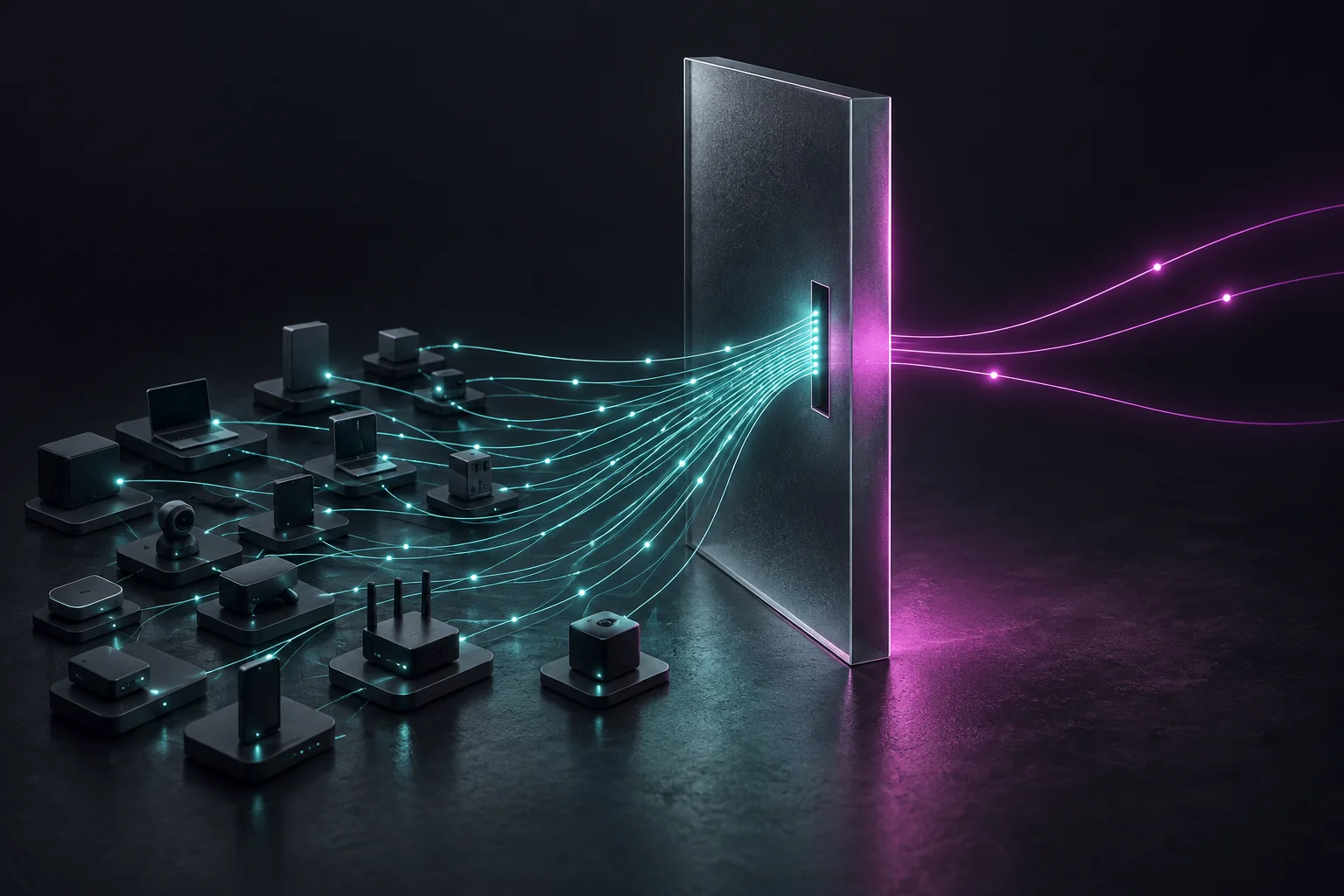
Owning your own network was always possible. It just required a network engineer. Now the agent that is going to live on your network can build it. With doxx.net, an agent creates the private network, configures security policy, establishes private names, sets firewall rules, leases public IP addresses, connects devices, and manages the secure paths your people, services, devices, and agents use to communicate. This is not an agent drawing a network diagram and congratulating itself. It is an agent building and operating a real network, under your policy, with your own address space, naming, and trust boundaries.
You can give an agent its own identity and link it directly to your phone, so it reaches you inside an environment you control.
Then the network your agent built becomes the network you use: to call a friend, share a file, run a private service, or let one agent talk to another. The boundaries your agents need are no longer a policy document. They are the network.
Boundaries the Network Enforces
Security should not begin after someone clicks the phishing link or an agent visits a malicious destination. On doxx.net it begins before the connection exists.
DNS Protection blocks the destination before you or your agent ever reach it. Since December 2025 it has blocked more than 38 million threats, growing at more than 1.2 million a week by combining 30 filtering lists with neural-network detection that catches malicious destinations static lists have not seen yet. That is where your agents can go and what they can resolve, decided in the network, not in a prompt.
The same network makes you harder to see. Web Privacy masks the signals browsers and devices leak for fingerprinting: screen size, fonts, language, operating system, rendering characteristics. Onion Routing moves traffic through multiple relays so identity and activity stay apart. Covert Networking uses six protocols that make private traffic look like ordinary web activity, for places where VPN traffic gets flagged or blocked.
That leaves the last boundary, what they leave behind. It is the one you cannot fake.
Nobody in the Middle, at Any Layer
Privacy claims are cheap. Anyone can put “no logs” on a landing page. It is much harder to build a system that has less to collect, less to retain, and less to hand over when somebody comes asking. The only way to do that is to take the middleman out of every layer. So that is what we did.
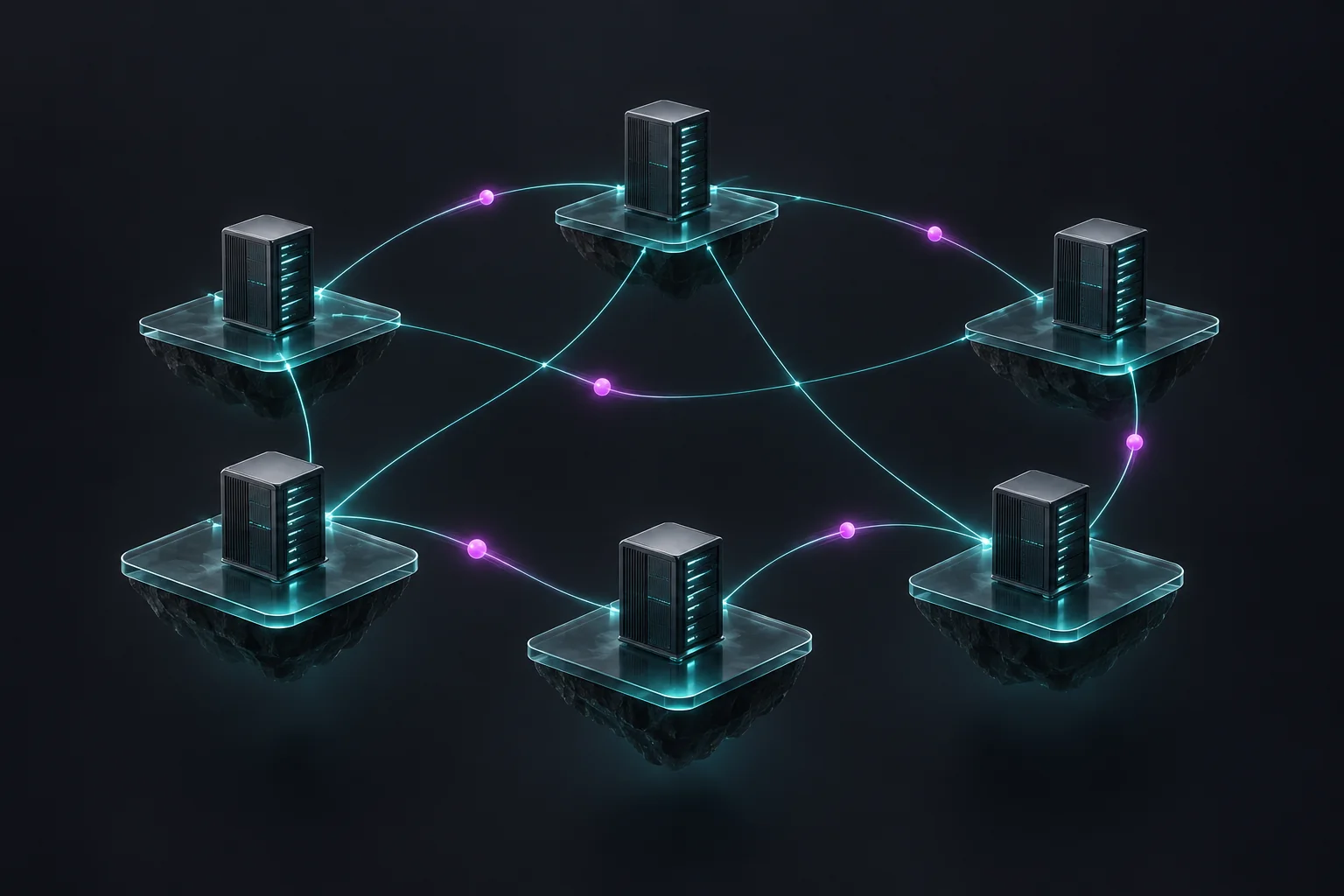
The infrastructure. doxx.net is not a prettier tunnel into a public cloud. We physically built the core layers ourselves: our own autonomous system and IP space, DNS root and private naming system, certificate authority and trust model, encrypted mesh, and dedicated hardware across a global backbone. We did not rent servers. We painstakingly built our own metal, server by server, card by card, connection by connection in every data center, so we control the full stack end to end.
Your identity. doxx.net uses proof-of-work and tokens instead of usernames, passwords, emails, and phone numbers. Events are processed in memory instead of assembled into a permanent, user-linked behavioral archive.
Your names and trust. You can run your own TLDs, internal domains, and certificate authority, so your services resolve inside your network without depending on public DNS or somebody else’s trust hierarchy.
Your communications. doxx P2P Comms gives you and your agents calling, chat, voice memos, and unmodified file transfer directly between devices and agents, across the encrypted mesh. No central communications server. No cloud calling platform. No staged file bucket. No provider-held call-detail archive. No message log waiting for someone to ask for it.
Your First Freedom Call
The first time I made a call across the network, I kept thinking about what had just happened. An agent had configured the network. It had helped set the policy and allocate the address space. Then I called someone through my own private network, with no phone company and no central server in the middle. No one had created a record of the call, because there was nowhere for one to be created.
In 2003, I watched a network fail someone because of how it was built. This one could not record my call for the same reason.
That was our first freedom call. Yours is next.
Come Build With Us
The open beta is live. We have native apps for iOS, macOS, and Android, with Windows and Linux support, running on a global backbone.
Tell your agent to go to config.doxx.net and have it explain the setup to you and configure your network. Put traffic on it. Build a network. Make a freedom call. Then tell us what breaks. That is how we build something better.
If you are an engineer tired of fighting the public internet’s limitations, a founder building distributed systems or AI agents, someone operating from difficult networks, or simply someone done trusting companies that have not earned it, come see what we built. Join our Discord community. Download the beta at doxx.net.

Barrett (aka Doxx)