

Our Blog
OMG, are we having fun building the agentic networking future.
See how doxx.net combines its own infrastructure, an encrypted mesh and in-house AI to connect people and agents.
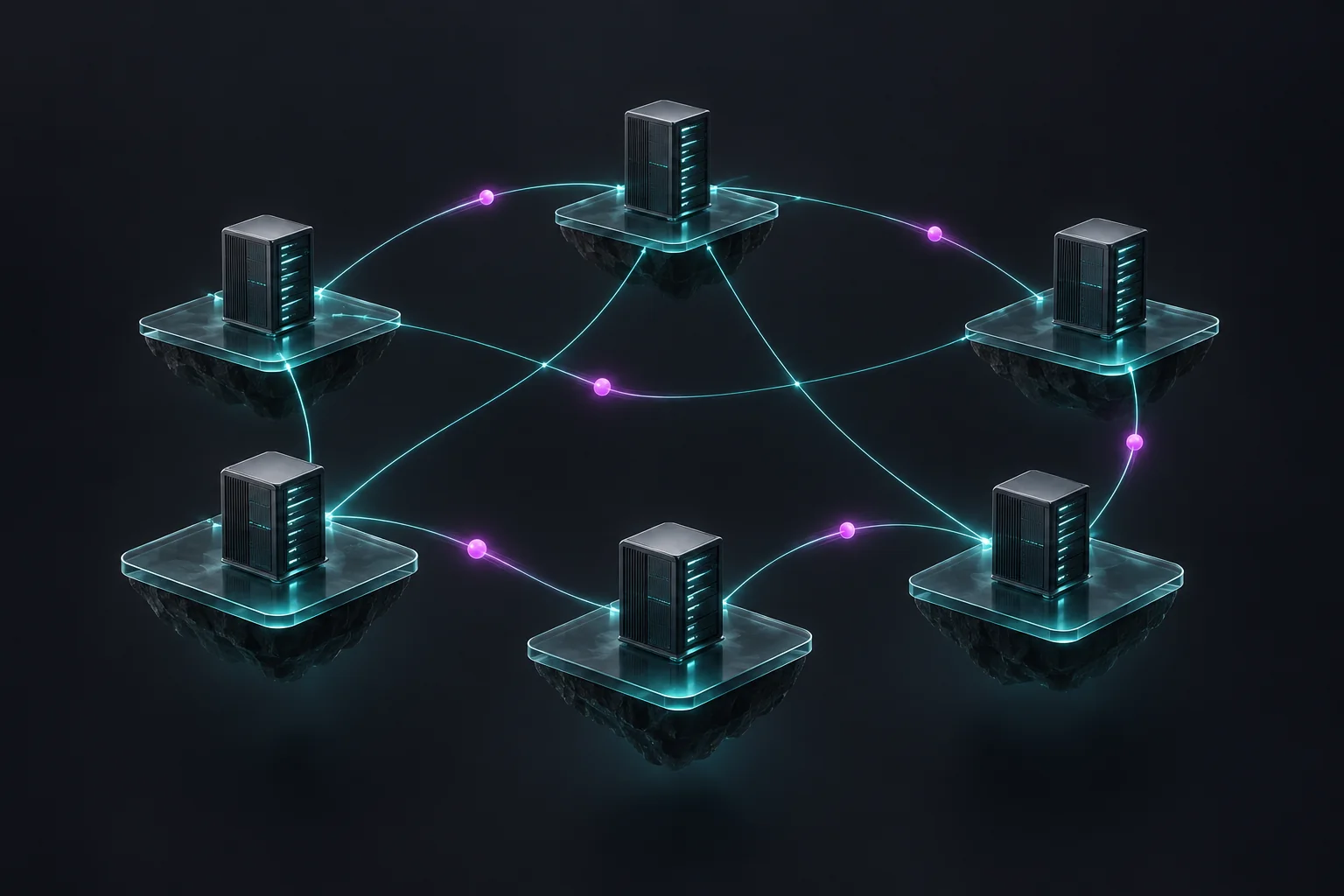
Welcome to the agentic network: doxx.net
This is something we’ve handcrafted across the planet from the ground up. We designed and deployed our own servers, built our own network stacks, APIs and database systems, self-hosted our AI inference, and built a global encrypted mesh network, with an app that ties everything together, plus a growing collection of tools designed to help agents work with humans.
And we’re just getting started. This has the feeling of the start of the Internet again.
This has been an absolute blast. It’s something I’ve been dreaming about for years, but until recently I never had the opportunity to dedicate 12+ hours a day to actually building it.
We’ve done quite a few things differently at doxx.net, and we’re going to use this blog as an opportunity to explain those decisions, talk about the architecture, share our open-source projects, discuss what worked and what didn’t, and generally document what happens when you rethink how a global network should operate from first principles.
One of the biggest differences is that doxx.net doesn’t have traditional systems administrators or network administrators. There isn’t a NOC full of people manually adjusting routes, tuning paths, or operating the backbone.
The network is operated by our in-house AI system. We named it “nonoc” and it works much better 24/7 than having humans run the global mesh backbone. And, more secure.
Our encrypted mesh is fully interconnected across our global sites, so site-to-site traffic travels across an encrypted backbone rather than simply being handed off to the public Internet. That same network carries our peer-to-peer services: calls, chats, file transfers and other applications. Soon group chat, public chat, leader boards, and video calls all ride on the mesh.
The result is multiple layers of security. Applications provide their own end-to-end or application-layer encryption, while the underlying traffic is also protected as it moves across the encrypted mesh.
This architecture gives us something we care deeply about: sovereign networking.
We don’t need to know what you’re doing.
We don’t log your activity.
We don’t use sFlow or NetFlow to reconstruct what is happening across the network.
In fact, we designed our operational telemetry differently so that the system responsible for keeping the network healthy doesn’t even require a global view of individual user IP addresses.
There is another important consequence to this design: there aren’t hundreds or thousands of employees with privileged access to the network.
There is the AI system… and me.
For continuity and disaster recovery, I maintain a backup key that has been physically split and stored in two separate secure locations, locked. If I am ever unable to operate the system myself, recovery requires two trusted people. They are both longtime employees and close friends, and they must agree together to use the key.
We’re experimenting with what infrastructure looks like when AI isn’t simply another application running on top of the network, but is the network itself.
That’s the part I’m most excited to share.
Welcome to doxx.net.
